Crust & Crumble Bakers
Crust & Crumble Bakers
Most people see a finished floral cake and don’t think about the hour or two that went into it. From the outside it looks effortless. From the inside, it’s a quiet kind of work — one bloom at a time, one colour at a time, one steady hand.
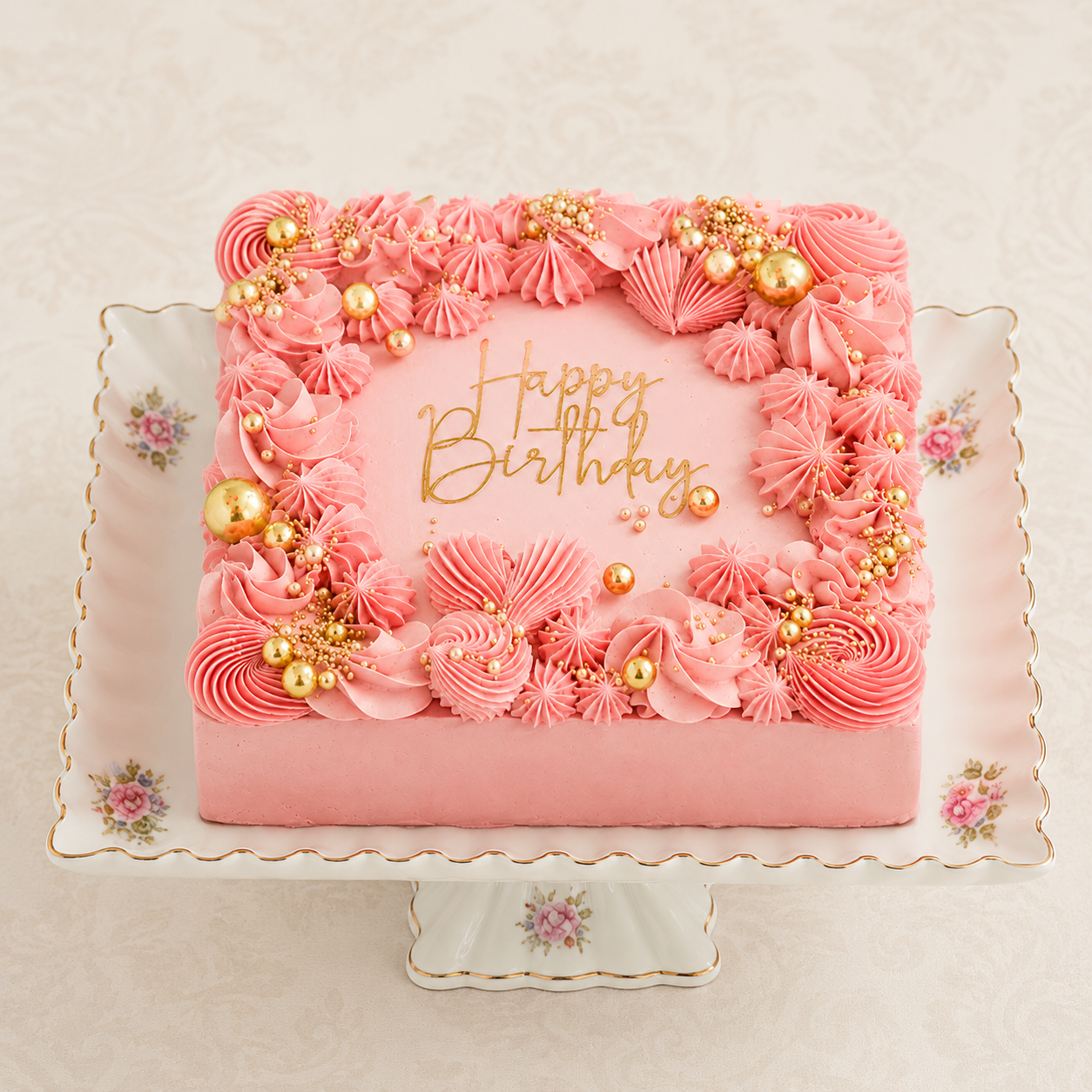
This is how the Rosé Buttercream Bloom Cake and the Garden Bouquet Buttercream Cake come together in our kitchen.
Before any piping happens, we mix the buttercream colours. A wedding shower asks for soft blush and ivory. A baby shower might lean dusty blue or sage. We don’t use store-bought tinted icing — every shade is mixed to order, gel-coloured by hand until it sits exactly right against the cake.
The largest blooms go first — a single rose, a peony, a ranunculus. These anchor the arrangement. Once they’re placed, the smaller flowers fill the gaps and the leaves curl around the edges. It’s the same logic a florist uses when building a real bouquet.
The leaves aren’t decoration — they’re structure. Without the dark green sitting between the blooms, the colours bleed into each other and the cake reads as one big pink blur. The greenery is what gives the bouquet its depth.
We always step back at eye level. A cake looks different from above than from the side, and most photos people take of their cake are from waist height — so the side has to read first. Last touches: a few stray petals, a dust of edible gold if it’s asked for, the cake board cleaned.
A floral couture cake takes roughly 90 minutes of piping for a 1 kg tier, sometimes more. We bake the sponge the day before and let it settle so it holds the design. There are no shortcuts here — no edible printed flowers, no pre-made gum-paste blooms. Every petal is buttercream, piped fresh, on the day it’s collected.
That’s the part we’re proud of. It’s also the part we wish more people could see.
Want us to bake something special just for you?
Order a Custom Cake